
KO LAW · STARTUP WORKSHOP SERIES · 2026
A startup workshop series, on camera.
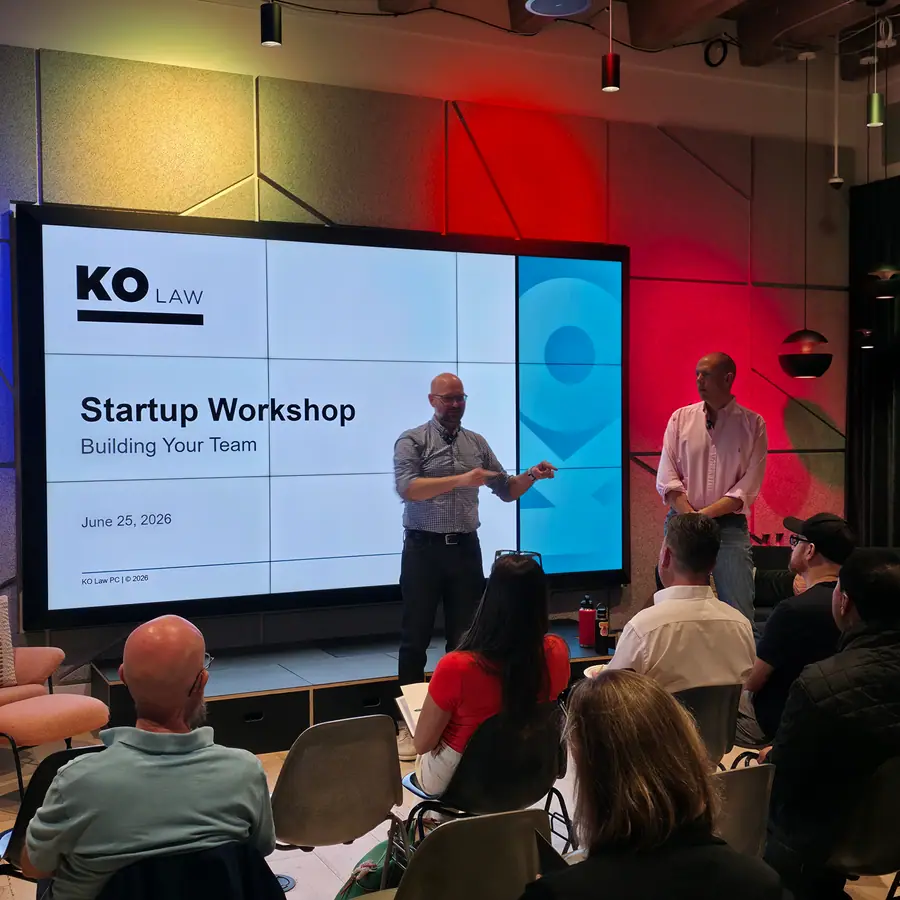
KO Law is a business-law firm in Boulder and Denver, and part of what they do is teach — a startup workshop series that walks founders through the fundamentals of building a company.
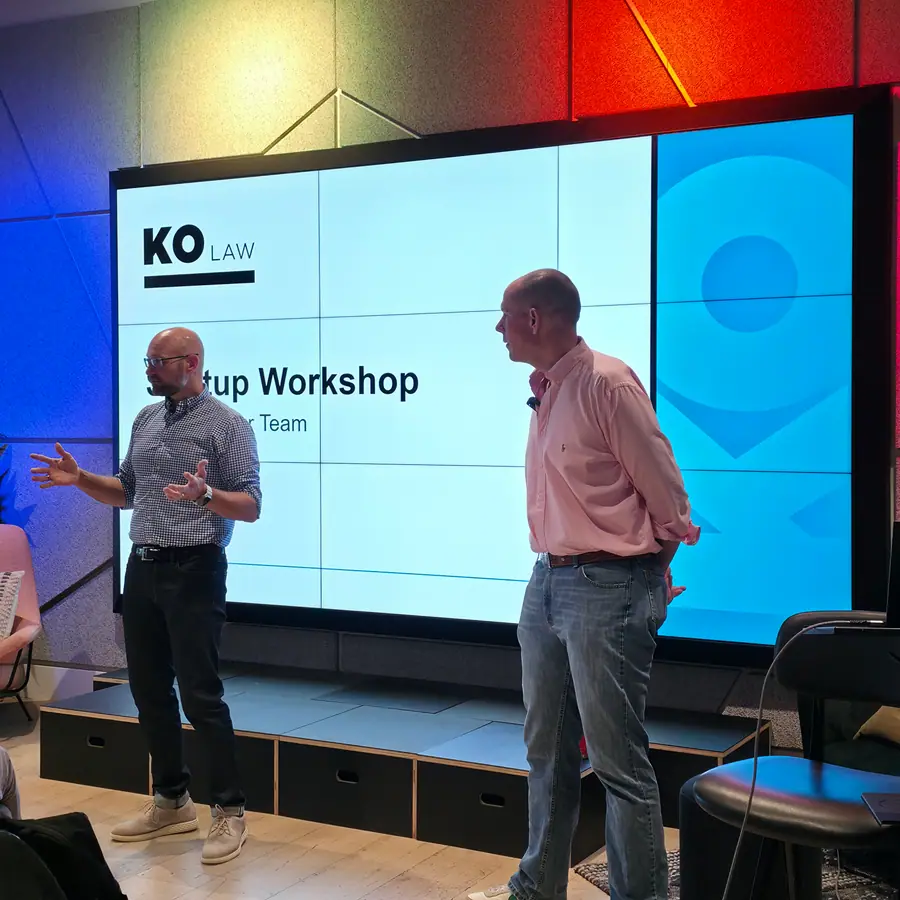
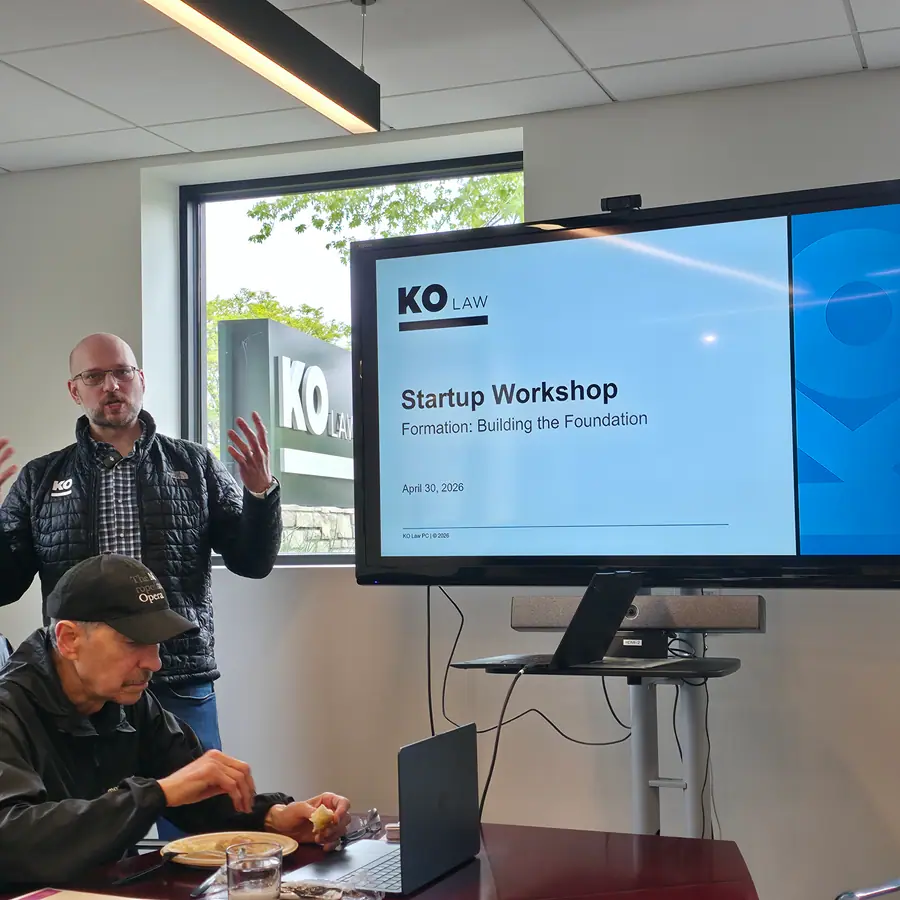
We cover the series as it runs, on video and in photographs — from an early boardroom to a full room under stage lights.
It's light, honest coverage: we show up, catch the session as it happens, and cut it into something that lasts.
- Jan 29, 2026Modeling the ExitThe exit, modeled — where the tax math can leave a founder wealthy on paper but cash-poor on closing day.
- Feb 26, 2026Mapping Your Business's LifecycleFrom incorporation to liquidity — how entity choice and vesting schedules keep a team aligned for the long haul.
- Apr 30, 2026Formation: Building the Foundation“You don't form a company. You answer questions, and what falls out of them is a company.”
- Jun 25, 2026Building Your TeamEmployee or contractor isn't the founder's call — classification follows control, and the label at the top of the agreement doesn't beat the facts.
What the series teaches
Four sessions, one long argument.
The series opens where most founders hope to finish. Walking a standard M&A waterfall on a fifty-fifty cash-and-stock deal shows how fast a tax bill can drain the liquid cash out of an exit — a founder wealthy on paper and cash-poor on closing day. Working-capital adjustments are the quiet one: a large vendor invoice landing days before a deal closes is a dollar-for-dollar deduction from the purchase price. And on governance, the two-two-one board — two founder seats, two investor seats, one independent — keeps coming back as the steadiest way to stop short-term friction from derailing long-term focus.
From there the sessions work backwards, through the lifecycle of a company to the moment it's formed. That formation session is Socratic by design: not how to fill out the paperwork, but which questions to answer before the paperwork answers them for you. Skip the entity and you haven't avoided one — you've formed a general partnership, where every co-owner is liable for every other co-owner's mistakes. Hand a passive investor a “President” business card to make them feel important, and the next plaintiff's lawyer reads it as evidence of operational decision-making.
By the summer session the subject is the team, and the lesson is that you don't get to pick. You can put “independent contractor” at the top of an agreement, get both signatures, and the label can still be worthless: classification follows control — who sets the hours, the location, the standards, who can hire and fire. It sounds like HR housekeeping. It isn't. Misclassification compounds silently while a company is small, then surfaces when an investor opens the records, or when a buyer's accountants find the exposure sitting in the data room and carve it out of the price.
Educational sessions — coverage, not legal advice.