
Field NotesAdventure Storytelling Media
The ice keeps its own time
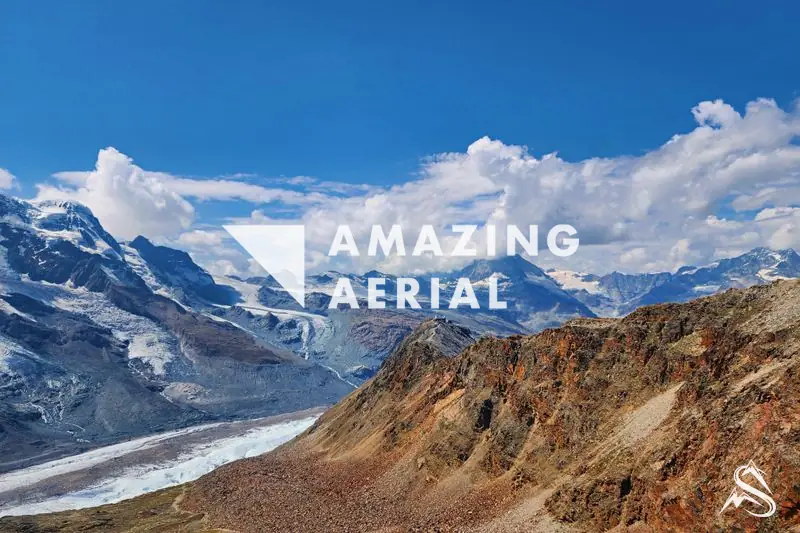
The Gorner Glacier fills the valley below, ringed by twenty-nine peaks over four thousand metres.
Gornergrat, Zermatt, Switzerland · 2023.08.14
 Aerial work licensed through Amazing Aerial Agency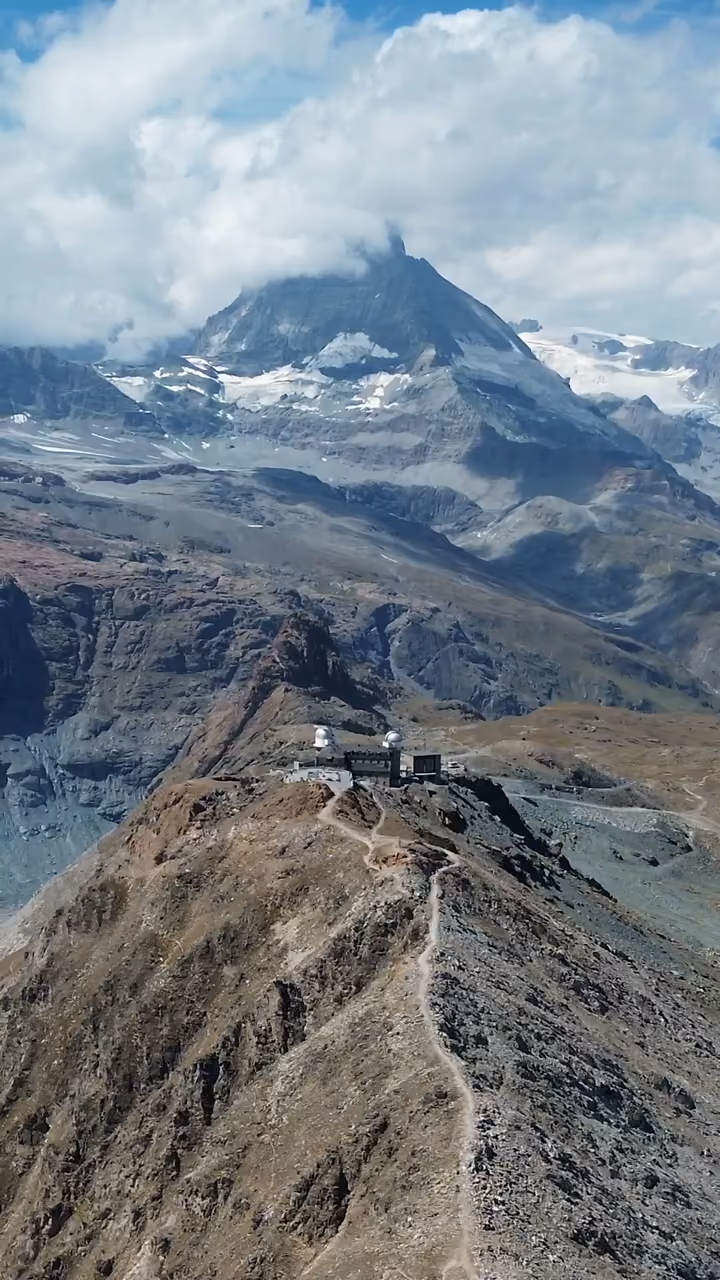
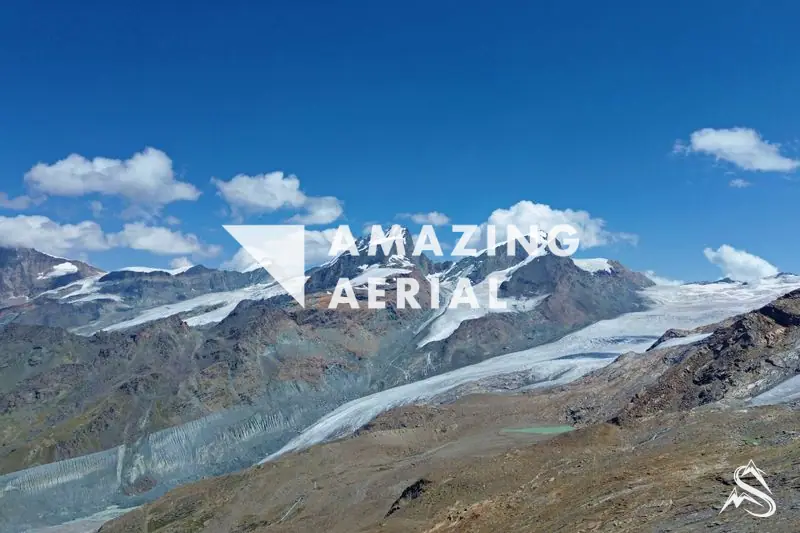
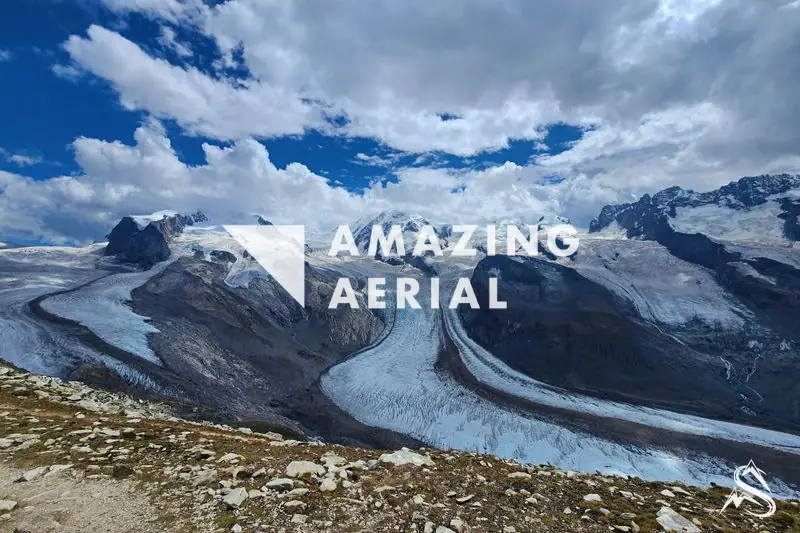
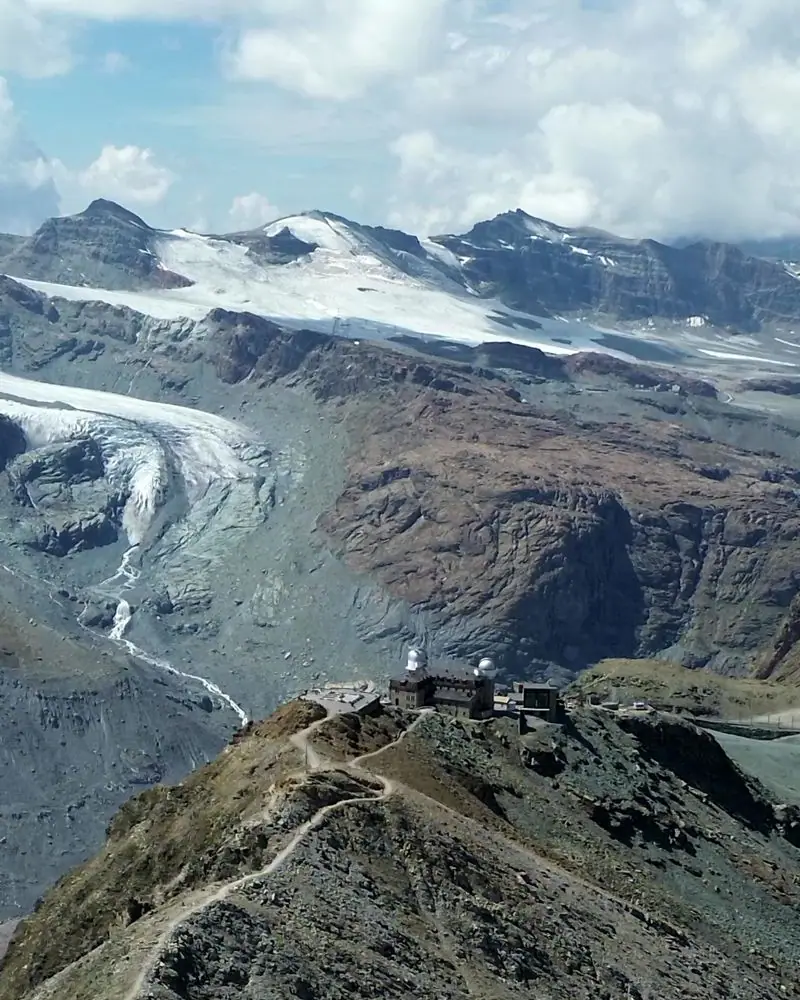
The ridge drops away and the Gorner Glacier fills the valley floor — a grey river of ice more than twelve kilometres long, curling down from the Monte Rosa snowfields. It is the second-largest glacier system in the Alps, after the Aletsch. From up here the dark moraine lines read like grain in old timber.
The summit station sits at 3,089 metres, and from the crest you can count twenty-nine four-thousand-metre peaks in a single slow turn. The Matterhorn stands off to the west. Behind the ice, the Monte Rosa massif carries Dufourspitze — at 4,634 metres, the highest point in Switzerland.
Getting here takes almost no effort, which is the strange part. A cog railway climbs from Zermatt, opened in 1898, the first electric rack railway in Switzerland and still one of the oldest running anywhere. It works on the same principle it always has: descending trains feed current back to the ones grinding uphill. Thirty-three minutes from the village to the top.
The ice is going, though. Since 1859 the Gorner’s tongue has pulled back more than 2,700 metres, and around 2015 it separated from its main tributary, the Grenzgletscher. Standing on the ridge you don’t feel any of it move. Come back in a decade and the frame will have changed.